

Teak
PremiumRich golden-brown, high in natural oil and silica. The benchmark for marine and prestige work.
Suits
Resort pools, yacht refits, signature villas
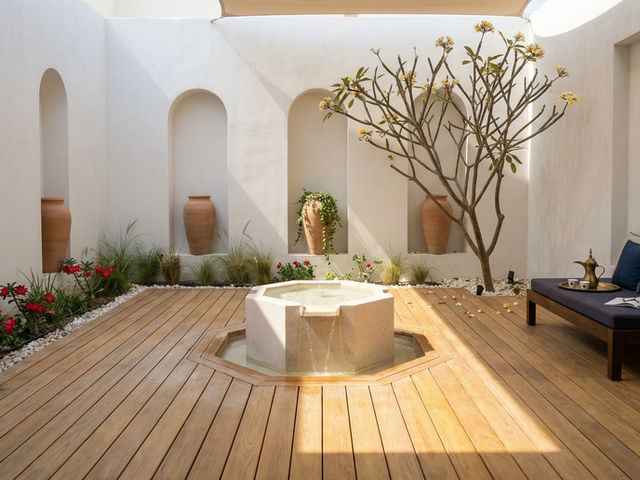
Teak, iroko, cumaru and yellow balau for pool decks, terraces and façades exposed to Gulf heat, sun and salt air.
In use across the Gulf




Species
Rich golden-brown, high in natural oil and silica. The benchmark for marine and prestige work.
Suits
Resort pools, yacht refits, signature villas

Golden-brown, weathering to silver-grey. A durable outdoor alternative to teak at a lower cost.
Suits
Villa decks, pool surrounds, balconies, terraces
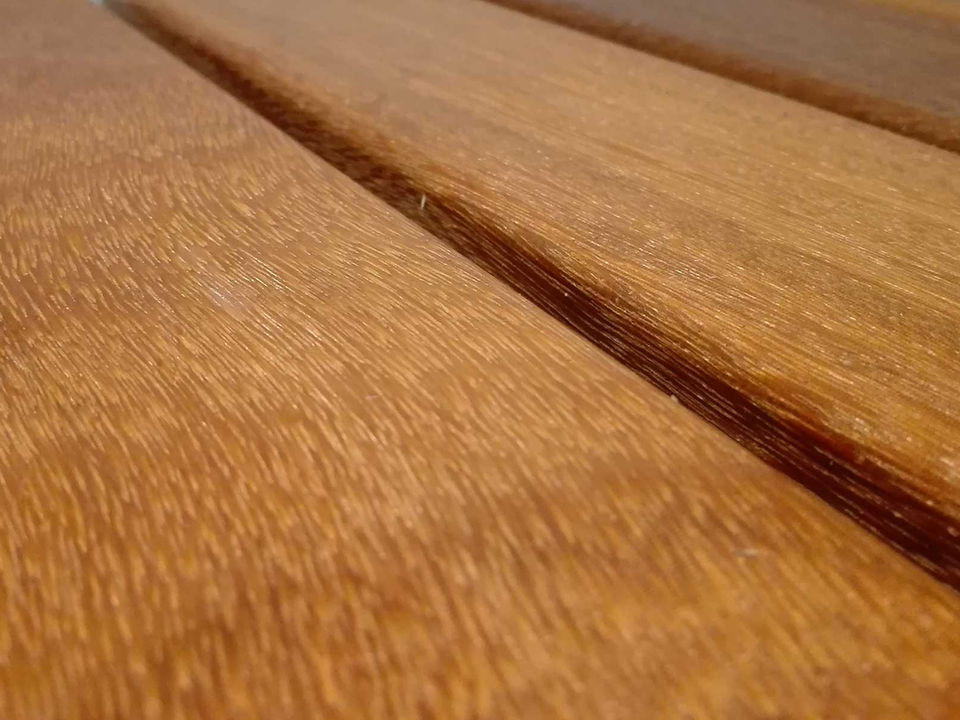
Very dense, reddish-brown with golden streaks. The hardest-wearing of the four.
Suits
High-traffic terraces, resort pool decks, public realm

Pale yellow-brown with a fine, straight grain. Takes oil well.
Suits
Large landscape and commercial packages
Finish and profile
Left natural
Uncoated, every species weathers to an even silver-grey within months of Gulf sun.
UV oil
An oil with UV filters, renewed every 6 to 12 months, holds the original warm tone.
Grooved face
A grooved anti-slip face adds grip around pools and on terraces that get wet.
Reeded face
A reeded profile for a textured look on decks and feature walls.
Gulf conditions
A good hardwood deck stays firm, quiet and flat through years of Gulf summers, and is cool enough underfoot by dusk. That comes from density and natural oils, not from coatings. Conventional softwood does not last here.
The same four species are profiled for walls and soffits, with hidden or face fixing. On coastal sites we recommend A4 stainless steel fixings throughout.
 Technical sheetPW-TS-01 · Issue 11/2026
Teak (plantation)
Iroko
Cumaru
Yellow balau
Typical values for guidance. Exact figures depend on the producer and the order.
Pricing hardwood for a Gulf project? Send an enquiry